It’s good news, with a touch of uncertain caution, in Federal Reserve Chair Jerome Powell’s delivery of the central bank’s semiannual monetary policy report to Congress on Wednesday.
The economic outlook is uncertain, and ongoing progress toward a 2% inflation objective is not assured. Reducing policy restraint too soon or too much could result in a reversal of progress we have seen in inflation and ultimately require even tighter policy to get inflation back to 2%.
Even with 10-year Treasury yields down, as of midday Wednesday they’re still above 4% and the 30-day average SOFR is more than 5.3%. Both would need to come down significantly to begin seeing improvements in lending rates, which typically start with one or the other and then add a spread.
The Minneapolis-based retailer has a plan to open 300 stores within the next 10 years, with the majority of them full-sized.
The big-box retailer has been growing its small-store footprint over the past decade to reach denser markets like New York City and Los Angeles.
Target Chief Financial Officer Michael Fiddelke said the 300 new stores would “meaningfully” extend the company’s reach into new neighborhoods. Ten years from now, he expects those stores to generate around $15B annually.
ALDI announced last week that it would add 800 stores nationwide by the end of 2028 through a combination of new openings and store conversions. This five-year expansion plan involves a $9 billion investment.
ALDI also announced the successful completion of its acquisition of Southeastern Grocers and its Winn-Dixie and Harveys Supermarket banners, which will play a key part in its expansion, especially in the Southeast region over the next few years.
Starting mid-summer, Winn-Dixie and Harveys Supermarkets will begin converting to the ALDI format.
ALDI also is adding nearly 330 stores across the Northeast and Midwest by 2028, solidifying its already strong market share in those areas. It will also grow its presence in the West by adding more stores in Southern California and Phoenix, and by entering new cities such as Las Vegas.
Potbelly hasn’t experienced net unit growth since 2017, but that will change this year significantly. The same will be true in 2025, 2026, 2027, and into the foreseeable future.
Potbelly saw positive same-store sales for the 11th consecutive quarter, ending Q4 at 6.3 percent. For full-year 2023, same-store sales lifted 12 percent. In both cases, traffic was a major driver of the comps. In 2024, the chain projects same-store sales growth in the low-to-mid single digits and adjusted EBITDA expansion in the high single to low double digits.
Potbelly has more than 600 locations open or in development. Recent financial success gives it confidence in gaining the additional 1,400 unit commitments to reach its 2,000-restaurant goal.
Burlington Stores reported strong fourth-quarter results that topped expectations. Total revenue increased 14% to $3.12 billion for the 14 weeks ended Feb. 3 . On a 13-week basis, total sales rose 9% to $2.98 billion, while comparable store sales edged up 2%.
The company hit a major milestone in 2024, opening its 1,000th store, and significantly strengthened its pipeline for new store openings through its acquisition of Bed Bath & Beyond leases. Burlington expects to open approximately 100 net new stores in 2024.
North America’s largest travel center network plans to add 35 travel centers and remodel more than 75 locations this year.
The 2024 growth plan includes 10 new builds to increase the company’s presence in several states, bringing additional services, amenities, and over 500 truck parking spaces to the road. Twenty-five dealer locations are also expected to join the network.
As part of its $1 billion New Horizons initiative, Pilot Travel plans to overhaul an additional 75 locations this year, for a total of nearly 200 completed remodels since launching the program in 2022.
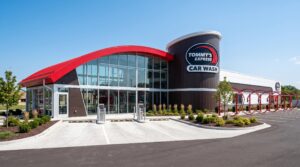
Tommy’s Express Car Wash Tommy’s Express Car Wash | www.tommys-express.com Tommy’s Express Car Wash Tenant Overview Tommy’s Express Car Wash operates as an international
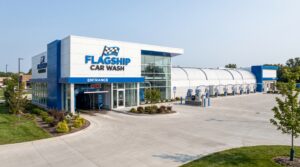
Flagship Carwash Flagship Carwash | www.flagshipcarwash.com Flagship Carwash Tenant Overview Flagship Carwash operates over 50 locations across the Virginia, Maryland, and D.C. region (with